Single-tower compressor desiccant air dryer designed for point-of-use applications...

Inline desiccant air dryers perfect for air tools and paint guns...
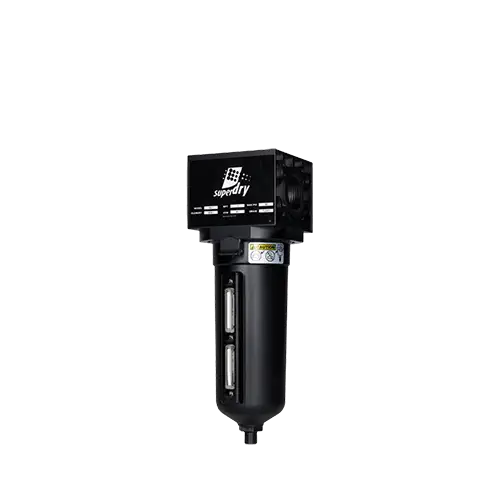
Mini separators, filters and dryers designed for air preparation...
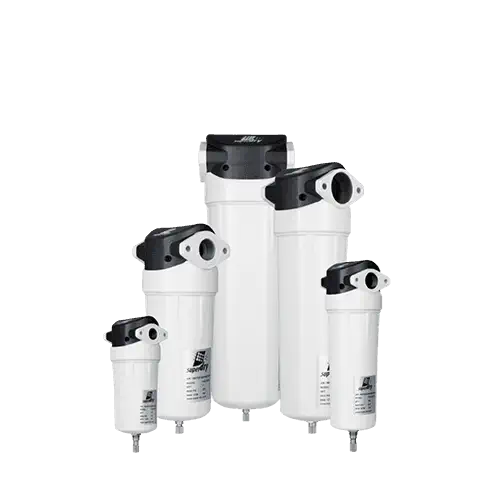
Water separators have been designed for the efficient removal of bulk liquid...
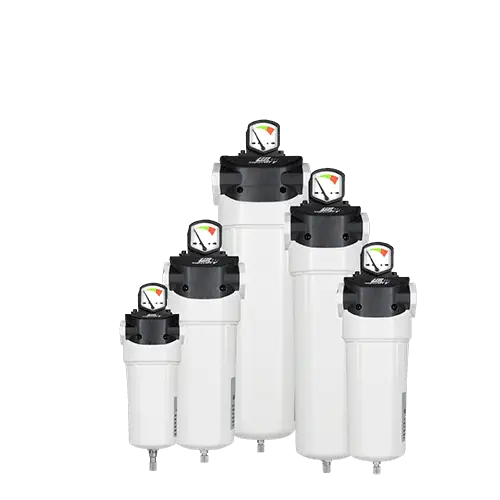
Compressed air filters effectively remove up to 99% of contaminants present in the compressed air...
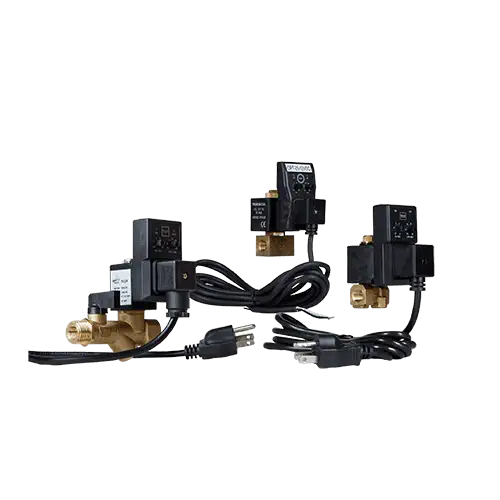
Automatic timer drains are designed to provide a solution for the automatic draining of filters, separators, receivers, drip legs...
A desiccant air dryer removes water vapor from compressed air through a process called adsorption — water molecules are drawn to and held on the surface of a porous desiccant material, typically activated alumina. The result is dry air delivered at a consistently low dew point, right at the point of use.
Super-Dry uses a single-tower, non-regenerative design. Unlike twin-tower regenerative dryers that consume a portion of compressed air to purge and regenerate the desiccant bed, the Super-Dry D-Series operates with zero air loss — every cubic foot of compressed air that enters the dryer exits dry. When the desiccant becomes saturated, the cartridge is simply replaced. This makes the D-Series the ideal solution for point-of-use, intermittent-flow applications: paint guns, sandblasters, air tools, diesel compressors, and nail guns.
Compressed air naturally carries water vapor. When that air expands through a spray gun, blast nozzle, valve, or air tool, the vapor condenses into liquid water. Left untreated, moisture causes:
A Super-Dry desiccant air dryer installed at the point of use eliminates all of these problems — delivering dry air exactly where it’s needed, at the gun, blast pot, tool, or valve.
Moisture in spray gun air is the leading cause of fish eyes, blushing, and paint adhesion failures. A desiccant air dryer for paint shops eliminates moisture at the spray gun — not just at the compressor — for consistently clean, dry finishes.
Wet blast air contaminates abrasive media, causes flash rust on prepared surfaces, and clogs blast pot valves. An air dryer for sandblasting keeps media dry, surfaces rust-free, and blast operations running without interruption.
Nail guns, impact wrenches, and air-powered tools corrode from the inside when moisture reaches internal components. Super-Dry inline air dryers for air tools install directly at the tool connection — no plumbing, no installation complexity.
Diesel compressors produce hot, moisture-saturated air. Paired with an aftercooler and water separator, a Super-Dry air dryer for mobile diesel compressors brings moisture under control on any jobsite — mountable on a dolly for easy positioning.
Instrument air, pneumatic actuators, control valves, and automated assembly equipment all require consistently dry compressed air. Super-Dry systems protect production continuity and extend the service life of compressed air infrastructure across industrial environments.
A refrigerated dryer cools compressed air to condense and drain moisture — typically achieving a pressure dew point of 35–40°F. A desiccant air dryer uses adsorption to achieve lower dew points. Super-Dry’s single-tower D-Series is optimized for point-of-use applications where zero air loss and simplicity are the priority. Compare desiccant vs refrigerated vs membrane dryers →
For point-of-use, intermittent-flow applications, desiccant cartridges typically last 1–2 years or approximately 2,000 hours of operation. An HGT-1/4 humidity indicator installed in the top port of the dryer will tell you exactly when it’s time to change. Learn more about desiccant cartridge life →
Sizing is based on your compressor’s CFM output and operating pressure. Take the 2-minute sizing quiz for a personalized model recommendation, or visit the FAQ page for detailed sizing and installation guidance.

Download our latest product catalog for product specifications and ordering information.

Copyright © 2026 | Super-Dry Systems Inc.