

Introduction
When dealing with compressed air systems, it is not only necessary to provide clean air; keeping the air dry is also important.
Compressed air humidity will:
- Ruin tools
- Destroy the quality of your product
- Rust your equipment eventually.
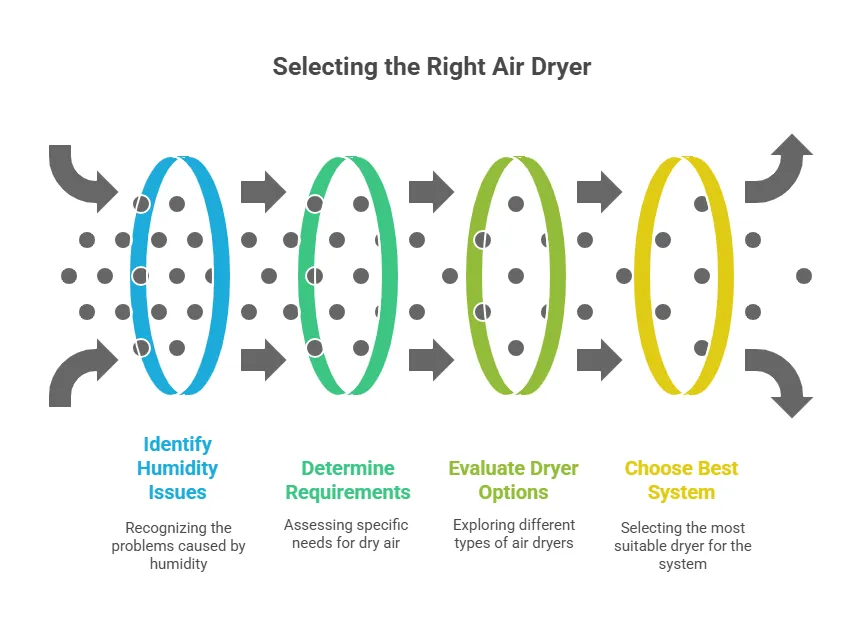
That’s where air dryers come in handy. However, with numerous types and technical jargon available, selecting the right one can be overwhelming. But, don’t worry, we’re here to make it easy.
In this article, you’ll know:
- Why do you require compressed air dryers
- What you need to take into account
- Which compressed air dryer system will work best for your system?
Why Do You Need an Air Dryer?
Compressed air always contains water vapor by nature. When that vapor condenses in your system, it triggers:
- Rust
- Clogs
- Costly breakdowns.
Compressed air dryers remove that moisture, delivering dry, reliable air.
It’s crucial for:
- Equipment lifespan
- Uniform product quality
- ISO standards compliance for clean air.
What Happens If You Choose the Wrong Compressed Air Dryer?
The improper selection of a compressed air dryer can lead to critical problems and additional cost.
If your application needs extremely dry air but you are running a standard refrigerated dryer, water will build up in tools, valves, or end products.
This can create rust, contamination, or product rejection.
In industries where products or food processing is done, a bit of moisture can destroy the quality.
Similarly, electronics and medicine need extremely dry air, something which only desiccant compressed air dryers can offer.
But putting a desiccant air dryer system in a place where it isn’t needed can lead to:
- Energy waste
- Higher maintenance
- Additional costs.
Always choose the right type of dryer based on dew point and how clean your system needs to be!
Key Selection Factors
When selecting an air dryer, numerous factors decide the most suitable choice:
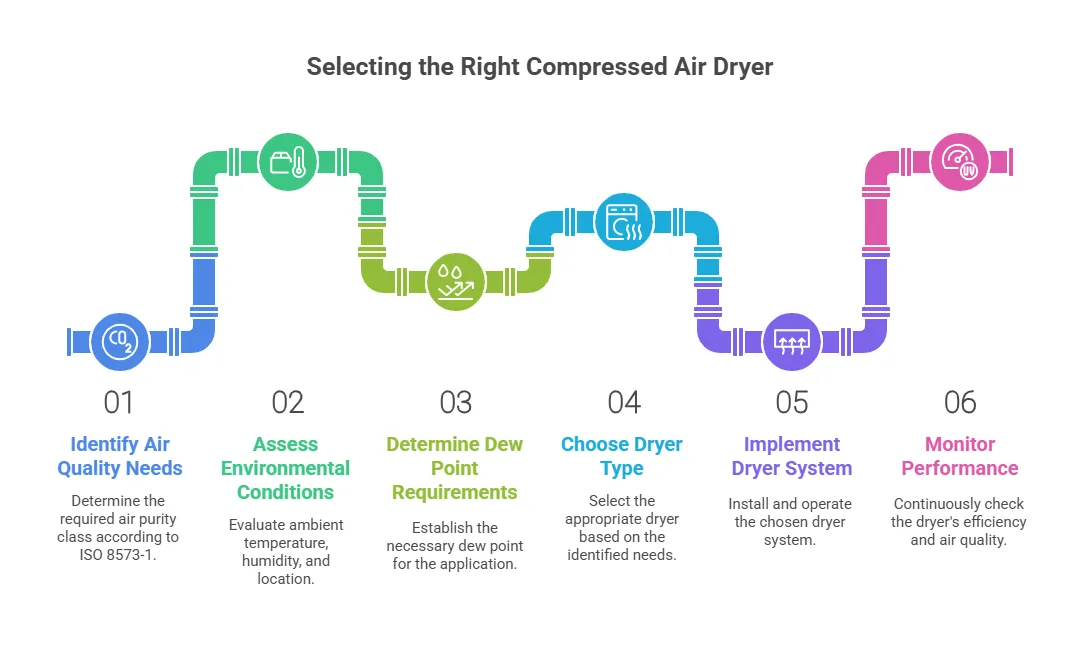
a. Air Quality (ISO 8573-1)
- The ISO 8573-1 standard specifies air purity classes (water, oil, particles).
- Your required class determines the kind of dryer and filtration needed.
- Increased purity demands better systems.
b. Environmental Conditions
- Ambient temperature and humidity influence dryers’ efficiency.
- Hot, dusty, or wet conditions may require special models.
- Location (indoor/outdoor) also affects performance requirements.
c. Dew Point Requirements
- Dew point is the temperature where water vapor turns into liquid.
- Applications calling for very dry air (-40°C) use desiccant dryers.
- For overall use, a dew point of 3°C (refrigerated dryers) will usually suffice.
Types of Compressed Air Dryers:
a. Refrigerated Dryers
Refrigerated dryers cool compressed air to condense and remove moisture. They’re ideal for everyday applications with moderate air purity needs (typically 3°C PDP).
Common Uses:
- Pneumatic tools
- Packaging lines
- Paint booths
- Non-critical food/beverage systems
- Workshop equipment
Limitations:
- Ineffective in freezing environments
- Can’t achieve very low dew points
Refrigerated dryers are further divided into two types:
- Cyclic refrigerated dryers
- Non-cyclic refrigerated dryers
Cycling Refrigerated Dryers
These models adjust cooling cycles based on demand, reducing energy use during low-load periods.
Best For:
- Facilities with fluctuating air demand
- Energy-conscious industries
- Medium-duty operations
- Non-continuous production setups
- Large compressors
Drawbacks:
- Higher upfront cost
- Slower responsiveness at startup
Non-Cycling Refrigerated Dryers
These operate continuously, offering consistent dew points and reliable performance for stable operations.
Best For:
- Continuous-use environments
- Consistent production demands
- Mid-sized compressors
- Workshops
- Standard tools and machinery
Drawbacks:
- Higher energy consumption
- Less efficient during low-load hours
b. Desiccant Dryers
Desiccant air dryers for compressed air remove moisture from compressed air by using hygroscopic materials that adsorb water vapor. They are ideally suited for very low dew point applications (as low as -40°C or less). Especially in cold climates or high-critical service applications like pharmaceutical or electronic uses. They’re continuous operating units but require regular maintenance and regeneration cycles.
Best For:
- Laboratories
- Food processing
- Paint spraying
- Clean rooms
- Electronics manufacturing
Drawbacks:
- Higher initial and maintenance costs
- Consumes more energy (during regeneration)
- Requires periodic desiccant replacement
Desiccant Compressed Air Dryers: Best Suited Industries
Desiccant air dryers are utilized where air dryness and purity are mission-critical. They’re best suited for:
- Pharmaceuticals: Averts moisture contamination in sterile conditions
- Food and Beverage: Guarantees hygiene and prevents spoilage
- Paint and Coatings: Averts moisture-caused paint defects
- Electronics Manufacturing: Safeguards sensitive circuits and microchips
- Petrochemical and Refineries: Guarantees safe, dry operation in explosive areas
- Hospitals and Laboratories: Provides clean, medical-grade air
- Cold Climates: Where water moisture would freeze up and clog the lines
Any business where even minute amounts of water vapor can result in damage or loss will appreciate desiccant dryers for air compressors.
Which Compressed Air Dryers Should You Choose?
Selecting the proper compressed air dryer is not a matter of selecting the most powerful model. In fact, it’s a matter of matching the type of dryer to your system’s particular needs and operating conditions.
Air quality requirements, tool or process sensitivity to moisture, and available maintenance capabilities all come into play.
Consider the following before making a choice:
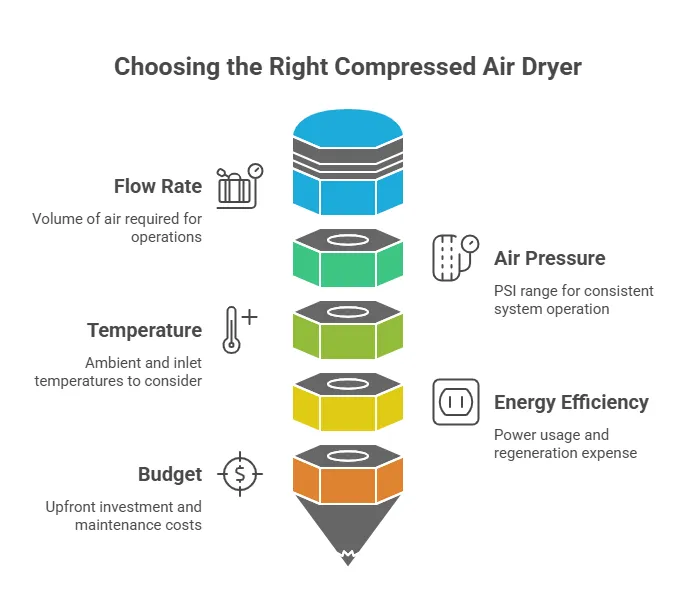
- Flow rate: Volume of air (CFM) your operations require
- Air pressure: PSI range your system operates on a consistent basis
- Temperature: Both ambient and inlet temperature should be considered
- Energy efficiency: Power usage and regeneration expense should be examined
- Budget: Upfront investment and maintenance cost in the long term should be balanced
Real-World Case Study: Boosting Efficiency in a CNC Machining Plant
Client Overview:
Medium-sized Ontario CNC machining factory with expertise in precision metal components for the aerospace and automobile industries.
Problem Faced:
The plant had issues with moisture contamination of its compressed air system, leading to corrosion of tools, substandard finish quality on parts, and unscheduled downtime, affecting delivery timetables and customer satisfaction.
Solution Provided by Super Dry Canada:
Super Dry performed an air audit and suggested a twin-tower desiccant air dryer with high-performance dew point control, tailored to achieve ISO 8573-1 Class 1 levels of air purity.
Implementation Process:
The dryer system was integrated with minimal downtime over a weekend. Pre-filters and after-filters were installed for added protection, and training was provided to the plant’s maintenance team.
Results and Benefits:
- 100% elimination of condensation issues
- 30% improvement in tool life
- Zero downtime due to moisture contamination
- Improved surface finish on machined parts
- Payback achieved within 8 months due to reduced rejects and maintenance
Client Testimonial:
“Collaborating with Super Dry has been a game-changer. The better air quality directly translates to our consistency of production. Highly recommend their services and assistance.”
– Operations Manager, [Client Name Withheld]
9. Common Mistakes to Avoid When Selecting a Compressed Air Dryer
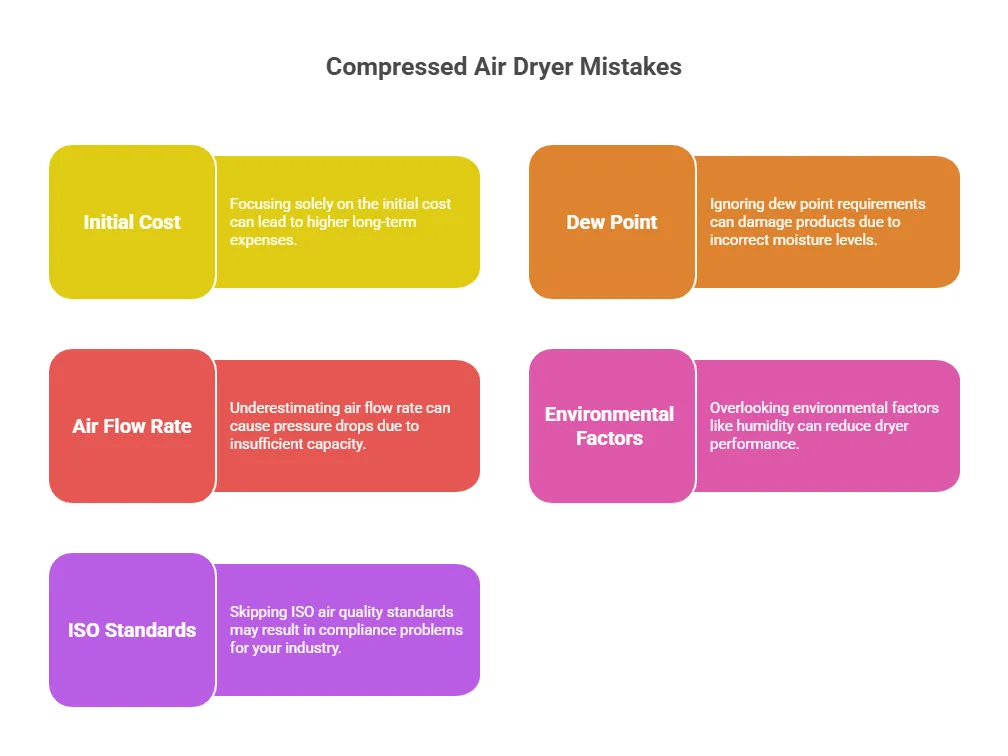
Choosing a compressed air dryer isn’t just about price—it’s about fit. Here are frequent mistakes to avoid:
- Focusing only on initial cost
A cheaper unit may have higher energy or maintenance costs long-term. - Ignoring dew point requirements
Each application needs a different dew point. Guessing wrong can ruin products. - Underestimating the air flow rate
Size your dryer for peak demand, not average use, to avoid pressure drops. - Overlooking environmental factors
High humidity or cold temperatures can reduce dryer performance. - Skipping ISO air quality standards
Not meeting the required classes for your industry may lead to compliance issues.
Pro Tip: Always consult a compressed air specialist and conduct an air audit before purchasing.
10. Why Choose Super Dry Canada?
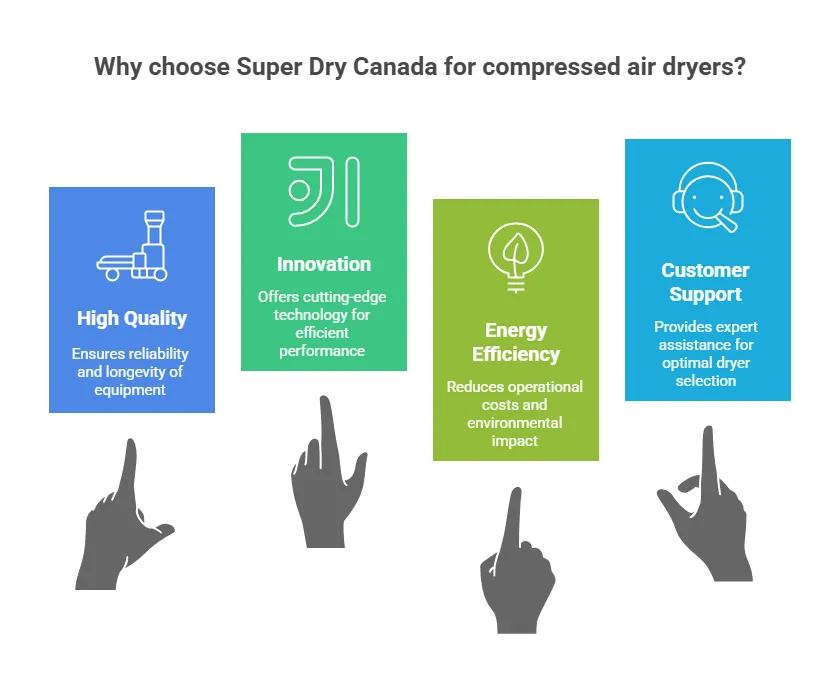
Super Dry Canada provides high-quality compressed air dryers for all industrial purposes. We are known to be reliable, innovative, and energy-efficient so they can work to the best at a longer duration with less downtime. Our support team helps you get the perfect dryer for your commercial needs so that you can get clean and dry air easily and at a low cost.
For queries, contact us now.